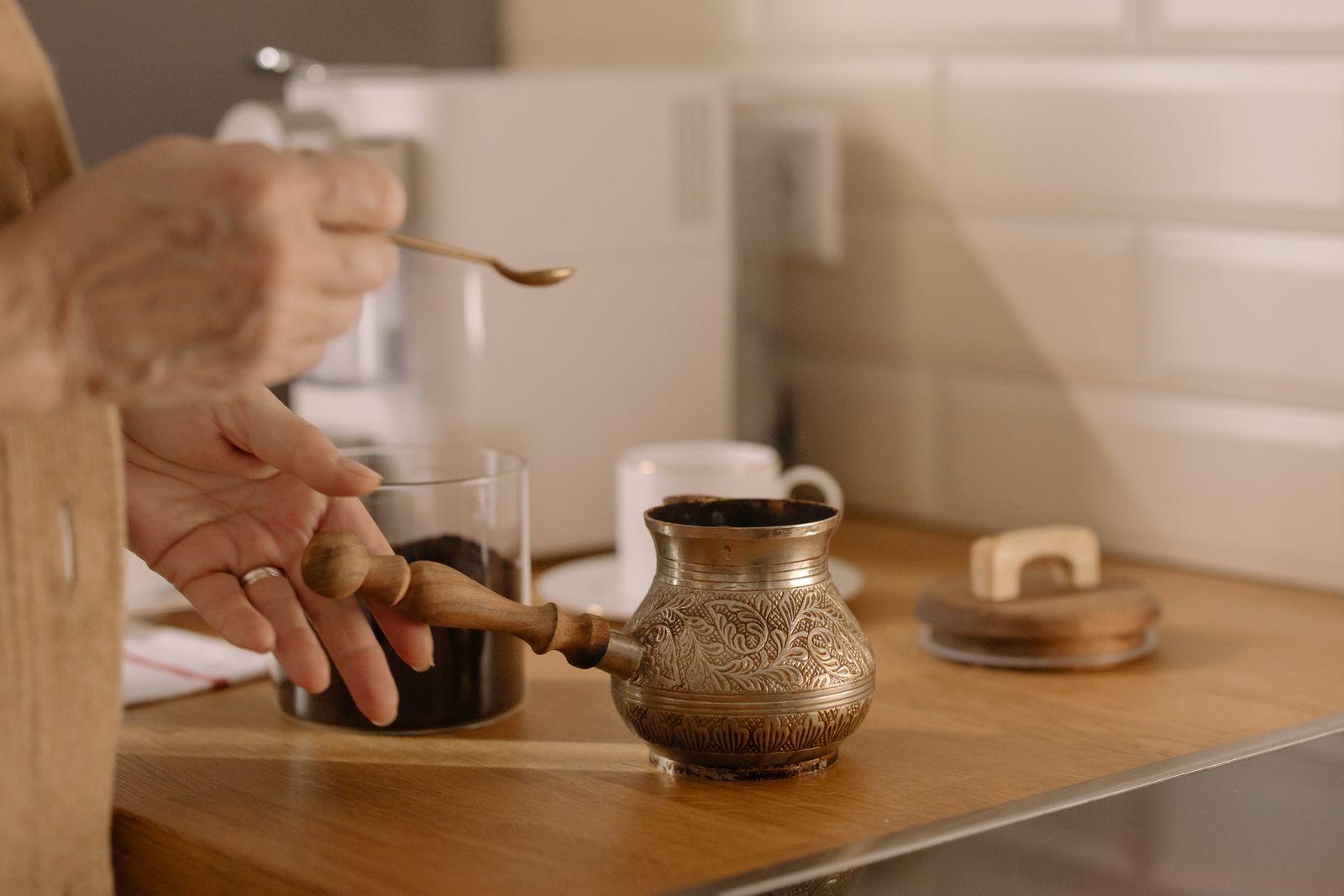
Qahwa is the Arabic word for coffee, but in the Gulf it usually means one particular drink: pale, fragrant, poured a mouthful at a time. It is the first thing offered to a guest and the last thing cleared away. This is how we make ours.
A roast you can barely see
Arabic coffee is roasted far lighter than espresso. The beans come out cinnamon-coloured and the cup is the colour of weak tea. That is deliberate: a light roast keeps the coffee’s own acidity and lets the spices sit on top rather than fight a bitter base. We use a natural-process coffee from the Haraz Mountains in Yemen, which tastes of dried apricot and cocoa before anything is added.
Cardamom first, saffron last
The coffee simmers for ten minutes, then comes off the heat. Freshly cracked green cardamom goes in, and a few threads of saffron for colour and a faint honeyed note. Some families add clove or rose water; we keep it to two spices so the coffee still speaks.
How to drink it
It arrives in a brass dallah with small handle-less cups called finjan. Hold the cup in your right hand. It is poured only a third full, so it is always hot, and it is topped up until you give the cup a small shake to say you have had enough. Eat a date between sips: the sweetness is the point.